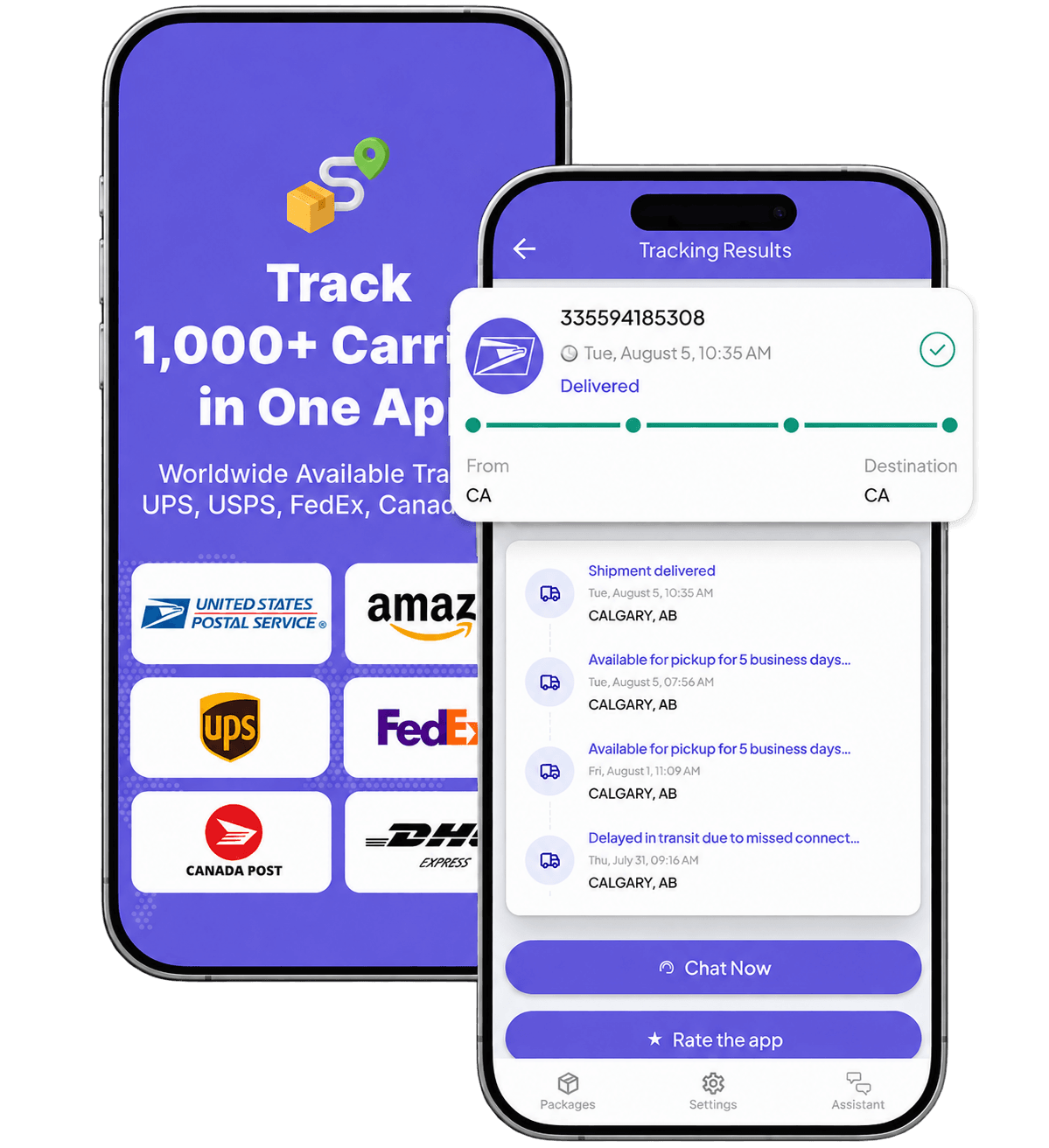
Track a Pitney Bowes parcel
Pitney Bowes first-party Shipping API documentation directs users to:
Pitney Bowes online tracking page
Pitney Bowes first-party documentation links to that tracking action. The evidence reviewed for this page does not separately establish that Pitney Bowes legally owns the shipment.co domain.
Use this sequence:
- Confirm that the order, merchant record, or shipment record actually identifies a Pitney Bowes/PB parcel-tracking context.
- Use the shipment tracking number supplied with that order or shipment.
- Open the first-party-linked Pitney Bowes tracking page.
- Read only the events, carrier names, numbers, and proof fields that the result actually exposes.
- If the shipment identifies a separate downstream carrier, use that carrier's official tracker for the physical-delivery stage.
If you are unsure whether the number belongs to the shipment you are looking at, use the tracking-number verification guide before drawing conclusions from a third-party tracker.
What changed after Pitney Bowes Global Ecommerce?
Pitney Bowes' former Global Ecommerce business was exited through the 2024 restructuring/wind-down. The company's 2025 Form 10-K says Pitney Bowes exited the GEC business and substantially consummated separation from the Ecommerce Debtors in December 2024.
That does not mean:
GEC exited
=
Pitney Bowes tracking is dead
Current first-party Pitney Bowes tracking documentation still points to the PB online tracker.
It also does not mean:
current PB tracker exists
=
the pre-2024 GEC operating model still exists unchanged
Pitney Bowes' Q2 2026 Form 10-Q identifies SendTech Solutions and Presort Services as its current reportable segments. The same filing includes cross-border solutions in services revenue and says Q2 and first-half 2026 SendTech services revenue increased partly because of higher volumes in a cross-border services contract.
Current Pitney Bowes developer documentation also continues to describe PB Cross-Border Delivery Service (CBDS) as a scoped cross-border parcel service. That supports current cross-border-service continuity, but it does not prove that every Pitney Bowes tracking record is CBDS or that every historical GEC lane survived unchanged.
Pitney Bowes Inc. itself was not the DRF Chapter 11 debtor. DRF Logistics/DRF LLC were the relevant Ecommerce Debtor entities in the former GEC restructuring.
PitneyShip tracking is not the same thing
This distinction matters because current Pitney Bowes products can display tracking data for shipments handled by other carriers.
Current Pitney Bowes support says that tracking history in PitneyShip, PitneyShip Pro, and PitneyShip Enterprise applies to packages sent through those products. If a package was not sent through those products, Pitney Bowes tells users to use the actual carrier's website.
So:
The same identity rule applies to other Pitney Bowes software:
- Shipping 360 is a shipping platform.
- PitneyTrack Inbound is an enterprise receiving and chain-of-custody tool used after packages arrive at an organization.
Seeing a parcel inside one of those systems does not by itself prove that Pitney Bowes physically transported it.
Which tracking numbers can I use?
The current Pitney Bowes Tracking API uses a tracking number as the package identifier.
The current U.K. Pitney Bowes package FAQ specifically tells users to search the PB tracking site by a PBX or UPA tracking number.
That is useful, but it is not a universal format rule.
Current first-party evidence reviewed for this page does not establish one worldwide Pitney Bowes:
- fixed tracking-number length;
- universal prefix family;
- universal PBX/UPA grammar;
- universal regex.
Do not assume a number belongs to Pitney Bowes merely because it resembles a format published by a third-party tracking site.
Internal API values such as PBI or PBCS are not consumer tracking-number formats and are not public carrier aliases.
`Shipment Details Received` does not mean Pitney Bowes has the parcel
This is one of the clearest current Pitney Bowes custody rules.
Pitney Bowes' current U.S. and U.K. package guidance defines Shipment Details Received as a state where Pitney Bowes has received the electronic shipping information but has not yet received the physical parcel.
So:
If the shipment remains at this stage, do not treat the existence of a tracking record as proof of physical acceptance.
The Pitney Bowes FAQ contains other example events, but those examples should not be turned into a universal status dictionary for every current and legacy PB service.
A Pitney Bowes-visible event may be an underlying carrier event
Pitney Bowes' Tracking API can return both:
- the underlying carrier's event code and description; and
- a Pitney Bowes standardized event code.
The API documentation also covers tracking across multiple carriers and services.
That means:
When custody matters, identify the actor behind the actual shipment event.
How do I find the downstream or final-mile carrier?
Do not use a generic Pitney Bowes partner list as proof of who has your parcel.
Use shipment-specific evidence in this order:
- A downstream carrier is explicitly named for the shipment or service.
- A second/local tracking number is explicitly tied to that carrier.
- The named carrier's official tracker recognizes that shipment.
- A shipment-specific acceptance or handoff event confirms the transition.
If those facts are absent, the downstream carrier is not confirmed.
Pitney Bowes' own documentation demonstrates why this matters. For the scoped PB Expedited product, current Pitney Bowes documentation expressly says USPS is the carrier. That is a service-specific rule, not a rule for every Pitney Bowes-tracked parcel.
For international handoffs, use How to Find the Last-Mile Carrier and Local Tracking Number.
Does every Pitney Bowes parcel get a second tracking number?
No universal second/local tracking-number field was established by the current evidence reviewed for this page.
Some multicarrier or handoff chains can expose another carrier or another number. A second number by itself does not prove that the physical parcel has already been handed over.
How long does Pitney Bowes delivery take?
Do not use one universal 3–5 working day rule for every Pitney Bowes parcel-tracking context.
Current Pitney Bowes package FAQ wording is broad, while the current service evidence shows that timing can depend on the specific carrier, service, lane, merchant agreement, parcel, destination, and other conditions.
The safe rule is:
Current evidence reviewed for this page does not support one universal Pitney Bowes delivery SLA across every current and legacy PB parcel-tracking context.
If the actual shipment identifies a downstream carrier or exact service, use that service's current official timing information.
If tracking has stopped changing, use Tracking Not Updating rather than assuming a universal PB delay threshold.
What does `Delivered` prove?
A Delivered tracking event means the tracking system recorded a delivery event.
It does not universally prove:
- personal receipt by the named recipient;
- a signature;
- a delivery photo;
- GPS location;
- signer identity;
- who received it in a mailroom, front desk, or neighboring address.
Pitney Bowes' Tracking API can expose a deliveryProofUrl for a package picture or signature confirmation, but current evidence does not establish that this is available for every carrier, service, or shipment.
If the shipment is marked Delivered but you do not have it, use Delivered but Not Received. If a specific downstream carrier owns the delivery event, that carrier's official proof-of-delivery route may be the stronger source.
Who should I contact about a delayed or missing Pitney Bowes parcel?
Current Pitney Bowes U.S. and U.K. package guidance tells recipients with delivery or return-status questions to contact the merchant, retailer, or marketplace where the purchase was made.
Treat that as current recipient support routing, not as a universal legal-liability rule.
Do not infer:
merchant contact route
=
merchant is always legally liable
or:
merchant contact route
=
recipient can never have a carrier/service claim
Current recipient guidance reviewed for this page does not establish one universal consumer-facing Pitney Bowes parcel-claim route for every residual or legacy PB-tracked shipment.
Use the actor that controls the current problem:
| What you can observe | Best next actor |
|---|---|
| You need to open or interpret the PB parcel record | Pitney Bowes first-party-linked tracking action |
| Recipient package is delayed or missing | Merchant / retailer / marketplace under current PB recipient guidance |
| A downstream carrier is explicitly responsible for the delivery stage | That carrier's official tracking/support route |
| You need a refund, replacement, or order dispute | Merchant / marketplace |
| You are working inside PitneyShip or Shipping 360 | Pitney Bowes product/account support |
| You are managing an inbound package inside an organization | PitneyTrack Inbound workflow |
| A customs request is controlling the shipment | The named carrier, broker, merchant, or customs authority for that shipment |
| A merchant/account/service claim route is known | The exact eligible shipper/account/service claim process |
If the actor is still unclear, use Who Should I Contact About a Package?.
What this page does not establish
Current evidence reviewed for this page does not establish:
- that the former GEC model remains unchanged;
- one universal Pitney Bowes tracking-number grammar or regex;
- one universal final-mile carrier;
- one universal local/secondary tracking number;
- one universal delivery SLA;
- one universal delivery-attempt count;
- universal photo/signature/GPS/POD fields;
- one universal recipient parcel-claim route;
- that a PB-visible event always means Pitney Bowes physically performed the event.
These limits are part of the answer, not missing information to be filled with third-party guesses.
Privacy and 11Tracking limits
For tracking, use only the shipment tracking number.
Do not paste Pitney Bowes account passwords, PitneyShip/Shipping 360 credentials, API keys, payment-card data, identity documents, customs documents, claim evidence, private addresses, delivery photos/signatures, or private merchant messages into a generic tracking form.
11Tracking can help interpret tracking evidence and identify the likely responsible actor. It cannot contact Pitney Bowes or a merchant, create or backfill scans, recover or reroute a parcel, release a shipment, clear customs, file a claim, force a refund, access private accounts, authenticate private delivery facts, or guarantee delivery.
Pitney Bowes, PitneyShip, PitneyTrack, Shipping 360 and related names belong to their respective owners. USPS, UPS, FedEx and DHL are separate carriers. 11Tracking is an independent tracking helper and is not affiliated with or endorsed by Pitney Bowes or those carriers.
Tracking events and delivery estimates come from connected tracking services and carriers. Updates may be delayed, incomplete or revised. 11Tracking does not transport packages and cannot change a delivery.
After you track a parcel, its number is added to the page address so the result can be refreshed or shared. Anyone with that link can use the number, so share it only with people you trust.